
Household tips
Organic waste – a valuable resource
Sustainable & durable Waste disposal Recycling
Organic waste has enormous potential as a valuable resource. In this article, we explore the many aspects of organic household waste and its importance for a sustainable circular economy. Find out what your organic waste can be used for – and learn how to properly dispose of and recycle the biological waste in your household to make maximum use of it thanks to our practical tips.

Disposing of organic waste correctly
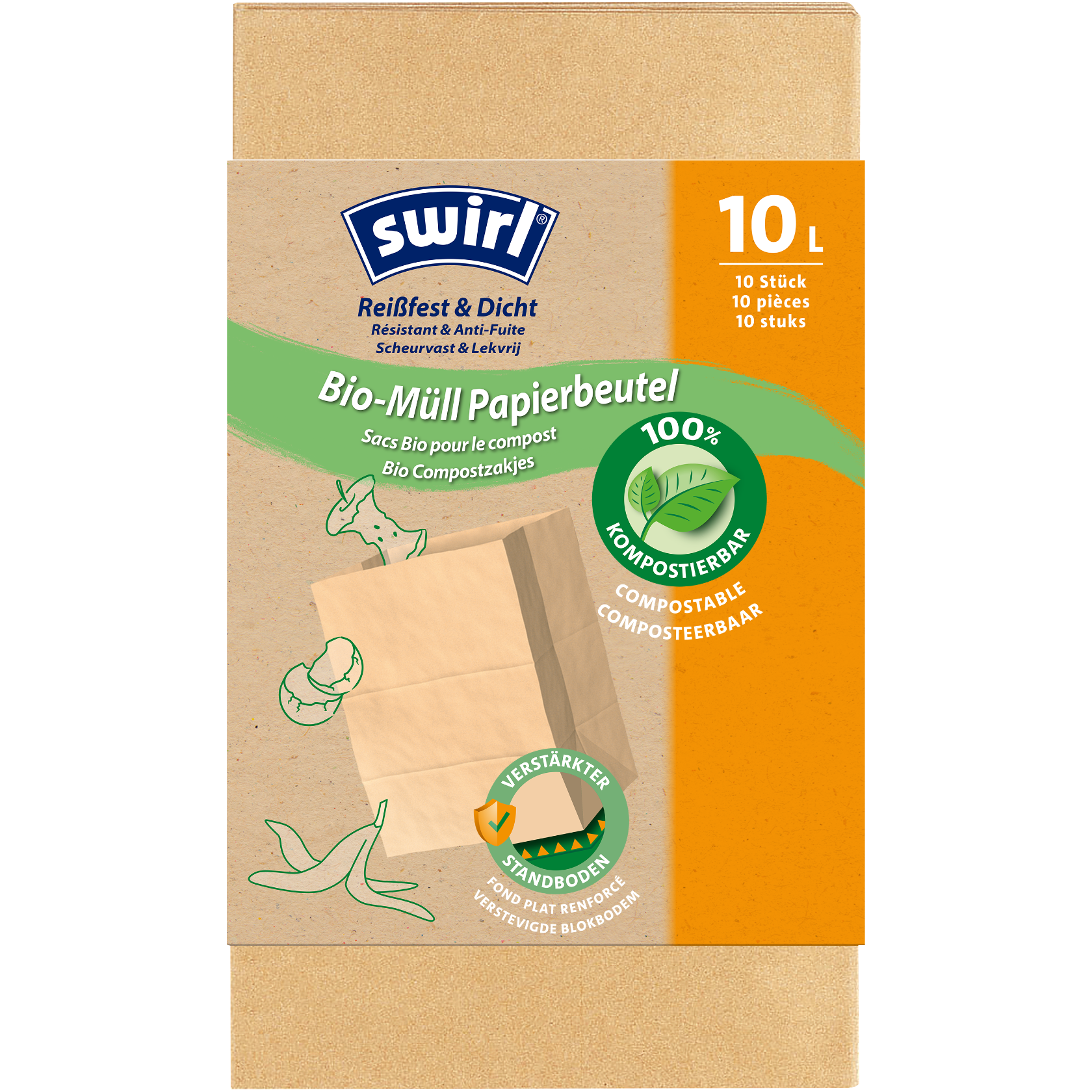
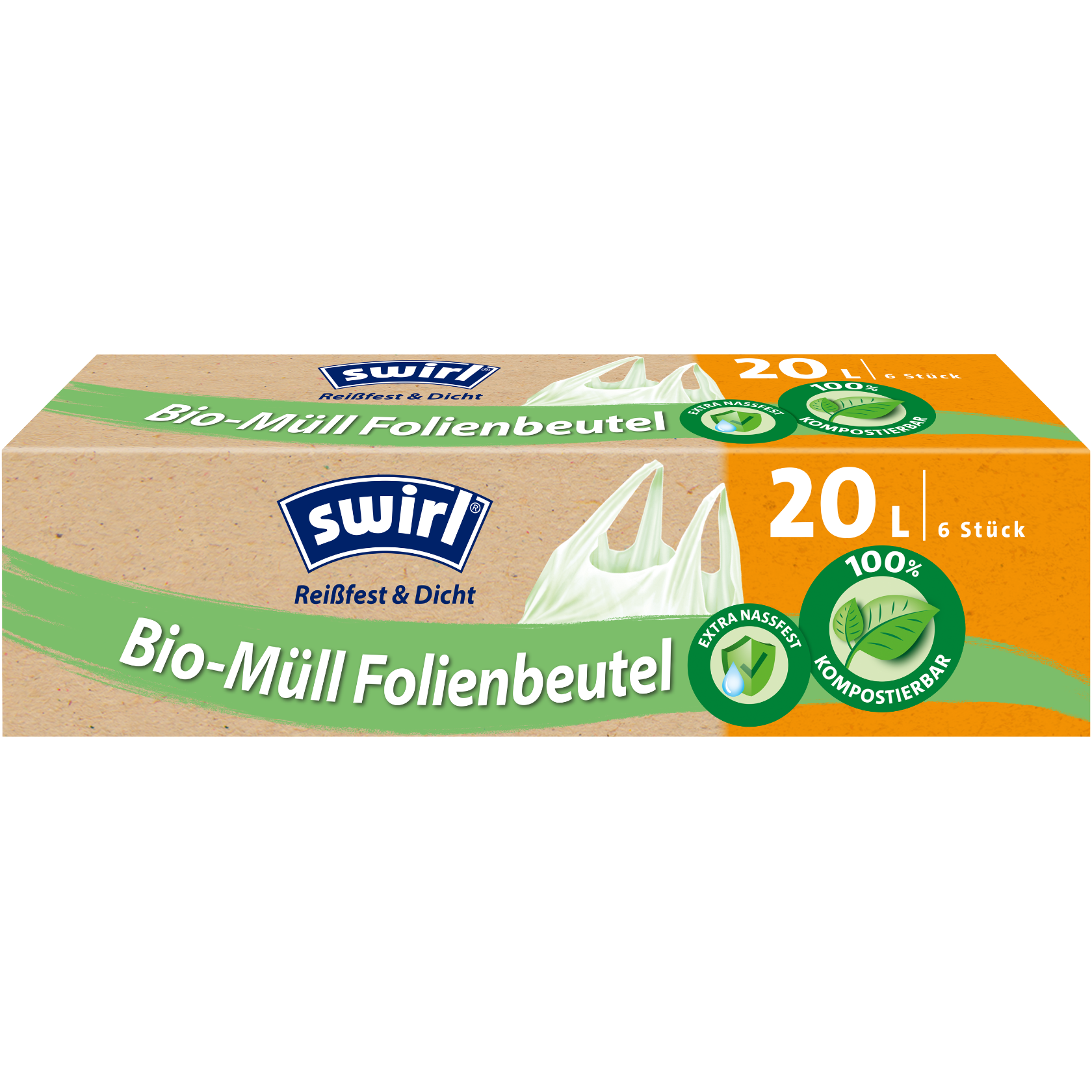
Not everything that has a natural origin belongs in your organic waste bin. Always dispose of your organic waste in a suitable waste bag - our organic waste paper bags with reinforced bottom, for example, are 100% compostable, made of tear-resistant wet-strength paper - and can definitely be put in your organic waste bin. With our organic waste foil bags with carrying handle , collecting organic waste becomes a particularly clean thing.
You can dispose of this waste in organic waste:
- Fruits and vegetables
- Cooked food scraps
- Coffee filters as well as coffee grounds, tea grounds and tea bags
- Bread and rolls
- Egg trays
- Unpackaged dairy products
- Small animal litter in small quantities (wood chips, straw and hay)
- Flowers and potting soil
- Grass clippings
- Plant remains
- Foliage
- Potted plants with balls
This waste must not be disposed of in your organic waste bin:
- Raw meat, bones, or raw fish
- Animal excrement and cat litter
- Textiles and leather scraps
- Biodegradable coffee capsules made of aluminium or plastic
- Hygiene articles and bandages
- Glass, stones or plastic
- Treated wood
- Paper, cardboard and paper towels
- Vacuum cleaner bags
- Ceramics and porcelain
- Medication
- Diapers
Proper disposal of organic waste is crucial to enable efficient composting or fermentation. You can ensure that your organic waste can be used optimally by separating it properly and storing or disposing of it. Separate organic waste such as fruit and vegetable scraps, coffee grounds and eggshells from the residual waste. Store it - for example in our compostable organic waste paper bags in an air-permeable organic waste bin or compost bin. Make sure not to put plastic bags or other non-compostable materials in the organic waste bin. Our practical organic waste foil bags with carrying handle are also a good option. However, find out before using them whether they are allowed in the organic waste bin in your city, because due to regional regulations and different types of composting, they are not approved for the organic waste bin in every region. By disposing of them correctly, you contribute to the conservation of natural resources.

The importance of organic waste as a resource
Biowaste is a valuable resource with great potential. Its importance lies in the possibility of creating a closed loop. By composting or fermenting organic household waste, we can return its valuable nutrients to the soil or generate renewable energy. This helps reduce greenhouse gas emissions and conserve natural resources.
The use of organic waste also offers economic advantages. Compost is used as a natural fertilizer in agriculture and provides plants with nutrients in a sustainable and environmentally friendly way.
Biogas, which is obtained from the fermentation of suitable organic waste, is used as a renewable energy source. The biogas is then used to generate electricity and heat, so that the use of fossil fuels can be reduced. By acting consciously and separating your waste correctly, you can help to make optimal use of this valuable resource and support sustainable development.

Tips for your organic waste
As a suggestion, we have put together a few practical tips on the subject of organic waste for you
1.) Proper separation: Make sure to separate the organic waste correctly from other types of waste. Avoid adding non-compostable materials so as not to affect the quality of the compost or biogas.
2.) Choose suitable garbage bags: Our 100% compostable organic waste paper bags made of wet-strength paper have a reinforced base and are particularly tear-resistant. So you don't have to worry about them tearing or leaking even with moist organic waste.
3.) Correct disposal: Only when your organic waste ends up in the right bin - the organic waste bin - can it be considered for recycling as biogas or compost.
4.) Use compost in your own garden: Use compost from organic waste as a natural fertilizer for your garden. It provides valuable nutrients and improves soil quality.
5.) Support local composting and biogas plants: Find out about local facilities that produce compost or biogas. Support them by using their products, for example.
6.) Raise awareness and education: Share your knowledge about the importance of proper organic waste recycling. Educate members of your household, family, friends, and neighbors about the benefits, misconceptions, and opportunities of using organic waste.
7.) Support community gardens: Get involved in community gardens that use household biological waste to improve soil. Support them by actively participating in garden projects or donate appropriate waste that can be used as compost.
By applying these tips, you can maximize the use of biological waste and make a positive contribution. By considering organic waste as a valuable resource and acting accordingly, you will help protect the environment and promote sustainable development.

Conclusion: Discover the possibilities
Organic waste is a valuable resource that needs to be valued and used. By properly disposing of and recycling organic waste, we can take full advantage of its benefits. Proper separation and storage, supporting local composting and biogas plants, and using compost in your own garden are just some of the ways to maximize the use of your biological waste. By recognizing waste as a valuable resource, we make a positive contribution to protecting the environment, the circular economy and sustainable development. Be aware of your organic waste and explore its many uses
Sustainable & durable Waste disposal Recycling
Our most popular products
Blog articles and practical tips


